Rwandans and Congolese should be allies, not enemiesSeptember 24, 2012 by Eric Kamba 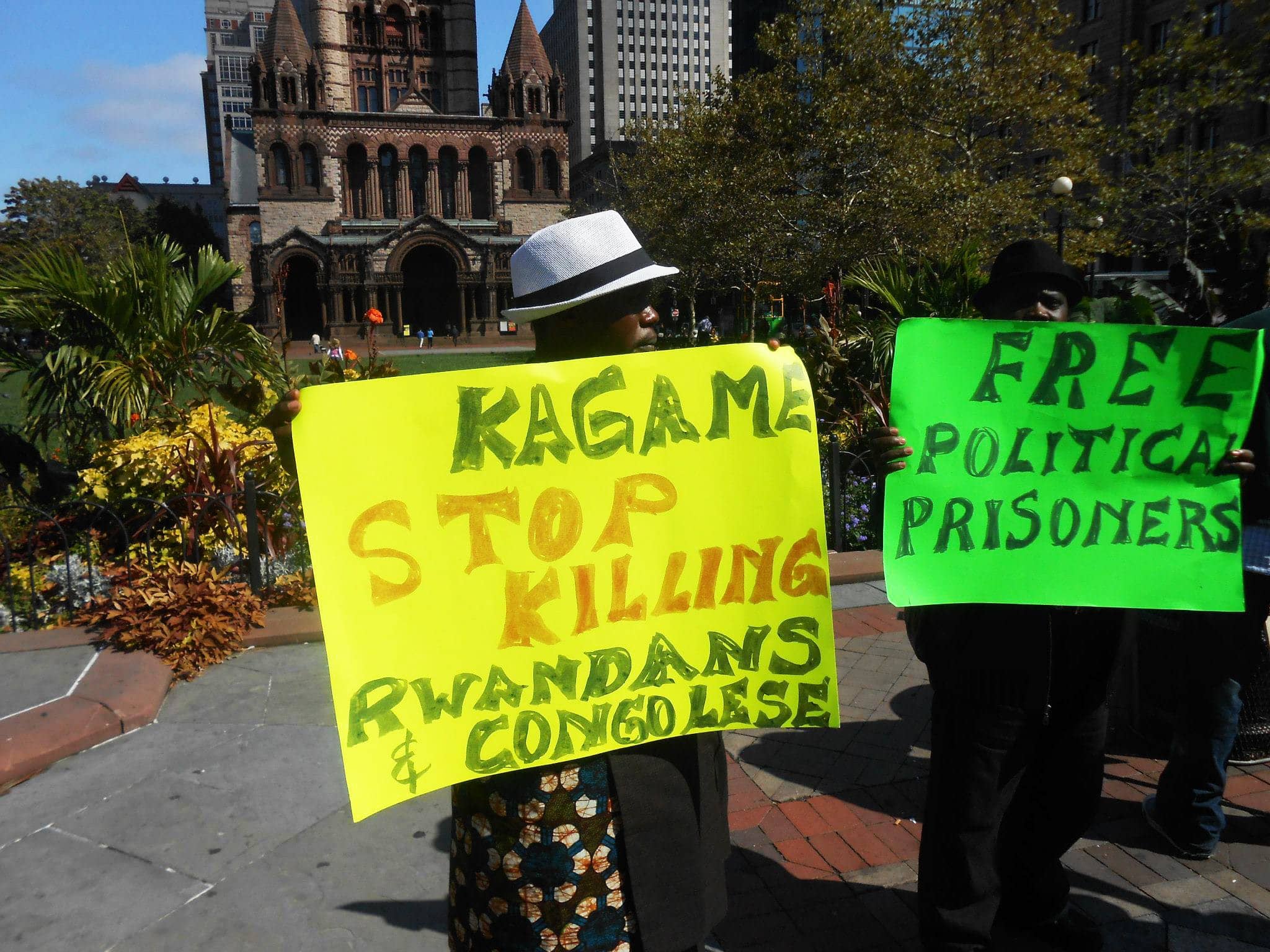 Protesters from Rwanda, Congo and Burundi denounce Gen. Paul Kagame outside the Boston hotel where he spoke to celebrate Rwanda Day, which writer Eric Kamba calls "a public relations fest for the repressive, criminal regime." This year's Rwanda Day, a public relations fest for the repressive, criminal regime of Gen. Paul Kagame, was thrown in Boston, Massachusetts, at the Westin Copley Place Hotel, from Sept. 21 to 22, 2012. When Gen. Kagame appeared at 3 p.m. to make his usual speech about economic growth and development, protestors from Rwanda, Congo and Burundi awaited him on the streets outside the hotel to remind him that his economic "development" has not benefited the majority of Rwandans – or the Congolese affected by his invasions of the Democratic Republic of Congo. I attended the demonstration and was pleased to meet not only Congolese but also Rwandan and Burundian people who all want to see Gen. Kagame's military dictatorship come to an end and see peace in the region. Kagame's regime is all about image and perception by his Western friends. While he travels the world in private jets, lives in luxury at the finest hotels, and draws a salary more than twice that of the Russian president and more than that of the UK prime minister, 70 percent of the Rwandan population live in extreme poverty.  Rwanda's imprisoned opposition leaders Victoire Ingabire, Déogratias Mushayidi and Bernard Ntaganda have been nominated for the European Parliament's Sakharov Prize. Kagame assassinates or imprisons any real critics or challengers to his regime. On Sept. 12, three of the country's imprisoned opposition leaders, Victoire Ingabire, Déogratias Mushayidi and Bernard Ntaganda, were nominated for the European Parliament's Sakharov Prize, which was created in 1988 to honor individuals or organizations who have dedicated their lives to the defense of human rights and freedom of thought. People inside Rwanda are continuously harassed by government, and prominent Kagame opponents have been assassinated in Kenya, South Africa, Congo and Tanzania. In May 2011, the London Metropolitan Police warned Rwandan citizens that they believed Rwandan nationals had entered the country intending to kill them. 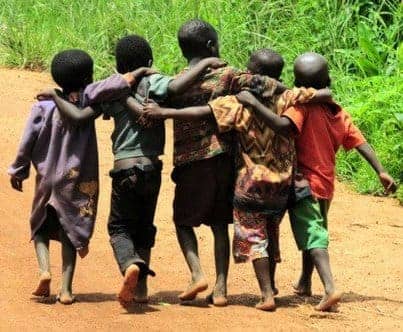 "I hope that the next generation of Rwandan and Congolese children will walk arm in arm to improve their lives and those of all African people." – Eric Kamba Can Gen. Kagame sustain the so-called "development" that he so endlessly drones on about without making war in Congo and plundering its resources? I don't believe so. But I do believe that Rwandans and Congolese can unite, as neighbors and as African people, to end the war and the repressive regimes waging it. Eric Kamba is an activist and a social worker with the Boston-based Congolese Development Center. He says he cannot safely return to his home in the Democratic Republic of Congo so long as Joseph Kabila remains in power. Eric can be reached at ekamba@aol.com. You may also like -Rwandans and Congolese should be allies, not enemiesSeptember 24, 2012 by Eric Kamba Protesters from Rwanda, Congo and Burundi denounce Gen. Paul Kagame outside the Boston hotel where he spoke to celebrate Rwanda Day, which writer Eric Kamba calls "a public relations fest for the repressive, criminal regime." This year's Rwanda Day, a public relations fest for the repressive, criminal regime of Gen. Paul Kagame, was thrown in Boston, Massachusetts, at the Westin Copley Place Hotel, from Sept. 21 to 22, 2012. When Gen. Kagame appeared at 3 p.m. to make his usual speech about economic growth and development, protestors from Rwanda, Congo and Burundi awaited him on the streets outside the hotel to remind him that his economic "development" has not benefited the majority of Rwandans – or the Congolese affected by his invasions of the Democratic Republic of Congo. I attended the demonstration and was pleased to meet not only Congolese but also Rwandan and Burundian people who all want to see Gen. Kagame's military dictatorship come to an end and see peace in the region. Kagame's regime is all about image and perception by his Western friends. While he travels the world in private jets, lives in luxury at the finest hotels, and draws a salary more than twice that of the Russian president and more than that of the UK prime minister, 70 percent of the Rwandan population live in extreme poverty. Rwanda's imprisoned opposition leaders Victoire Ingabire, Déogratias Mushayidi and Bernard Ntaganda have been nominated for the European Parliament's Sakharov Prize. Kagame assassinates or imprisons any real critics or challengers to his regime. On Sept. 12, three of the country's imprisoned opposition leaders, Victoire Ingabire, Déogratias Mushayidi and Bernard Ntaganda, were nominated for the European Parliament's Sakharov Prize, which was created in 1988 to honor individuals or organizations who have dedicated their lives to the defense of human rights and freedom of thought. People inside Rwanda are continuously harassed by government, and prominent Kagame opponents have been assassinated in Kenya, South Africa, Congo and Tanzania. In May 2011, the London Metropolitan Police warned Rwandan citizens that they believed Rwandan nationals had entered the country intending to kill them. "I hope that the next generation of Rwandan and Congolese children will walk arm in arm to improve their lives and those of all African people." – Eric Kamba Can Gen. Kagame sustain the so-called "development" that he so endlessly drones on about without making war in Congo and plundering its resources? I don't believe so. But I do believe that Rwandans and Congolese can unite, as neighbors and as African people, to end the war and the repressive regimes waging it. Eric Kamba is an activist and a social worker with the Boston-based Congolese Development Center. He says he cannot safely return to his home in the Democratic Republic of Congo so long as Joseph Kabila remains in power. Eric can be reached at ekamba@aol.com. You may also like - Rwanda: Colonizing Eastern Congo with U.S. support Rwanda: Colonizing Eastern Congo with U.S. support  Rwanda: Please go quietly off to jail, Madame Victoire Ingabire Rwanda: Please go quietly off to jail, Madame Victoire Ingabire  Related Posts |
http://www.fdu-rwanda.com/ Rwanda : 19 ans après les massacres de Kibeho restent toujours impunis avril 22, 2014 Ce 22 avril 2014 est un triste anniversaire. Souvenons-nous, en effet, c'est à cette date que plus de 8'000 réfugiés dans le camp de Kibeho furent tués à l'arme lourde et aux lance-roquettes des soldats du Front Patriotique Rwandais. Des dizaines de milliers de rescapés du camp qui ont tenté ensuite de s'échapper ont été froidement abattus sur leur chemin de retour, les uns, jetés dans des fosses communes, d'autres, jonchés tout le long des routes, d'autres enfin, tout simplement disparus, sans la moindre trace. Le camp de réfugiés de Kibeho abritait près de 200000 personnes. Que l'on se rappelle, c'est peu avant le 17 avril 1995 que, sous le prétexte fallacieux de démantèlement de prétendus arsenaux d'armes, six bataillons de l'armée du FPR (2000 hommes) et de la...
Comments
Post a Comment