Could Karegeya assassination speed up change in Rwanda?
The answer is YES according to the scenario put forward by AFRICOM study undertaken in 2011.
Jennifer G. Cooke, author of the study
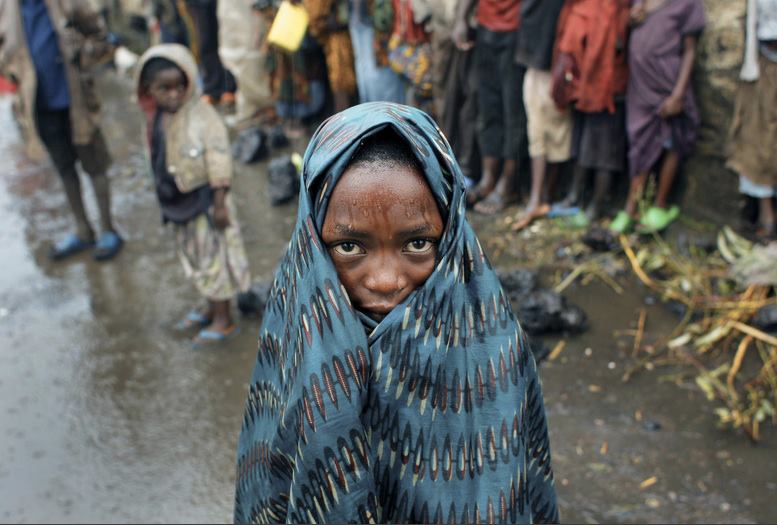
One of the thousands of victims of ongoing humanitarian crisis caused by M23 in Eastern Congo
, bases her hypothesis on 3 Key Points:
- The Rwandan government inability to manage political competition within a democratic framework may ultimately radicalize opponents who have no legitimate means to challenge the regime. Mutual suspicion and fear along ethnic lines – the product of more than a century of state manipulation-abide. But new coalitions that are united in opposition to the current ruling party may also emerge.
- The government's strategy of "development without politics," on which it has staked its domestic and international legitimacy, has important limitations, leaving the cornerstone of the country's fragile social compact vulnerable to economic shocks, possible setbacks, and growing economic inequality.
- Rwanda's continued interests and involvement in the eastern region of the Democratic Republic of Congo could have destabilizing effects, both in that country and within Rwanda.
One would here wonder if the author of the study knew that Patrick Karegeya was going to be assassinated. NO she did not, but his murder on 1/1/14 in South Africa fall in one of the scenario that she envisaged that could trigger rapid change. This is how she puts it in one of the hypothesis that could cause instability in Rwanda in the coming years:
The assassination of a high level figure within the RPF or in the opposition could provoke on the one hand a disproportionate security response from the RPF, or on the other hand, a spontaneous popular uprising.
Understandably the assassination of Patrick Karegeya did not occur in a vacuum. That explains the probable chain of events that it might influence.
In January 1994, the CIA Kigali Desk apparently presented to Washington the scenario of what would happen if the president Juvenal Habyarimana was to be killed. In terms of number of victims, the estimation was between 300,000 and 500,000. The figures were based on what had happened in the neighboring Burundi when the first elected Hutu president Melchior Ndadaye had been assassinated a few months earlier. Most exactly this was on 21/10/1993. In the case of Rwanda CIA estimates of casualties were widely and somehow exceeded.
If the predictions of AFRICOM were to materialize, the question to ask would be: "Are the stakeholders to the Rwandan case ready to embrace the predicted and predictable change?" Their level of readiness can save or waste lives. And these concerned parties include Rwandan politicians pro ad against Kagame, civil society, ordinary Rwandans inside and outside, and of course as well the famous international community which does not have a known postal address when it is critically needed.
The majority of Rwandans, in front of the political scenery, are behaving like ostriches. It is like they don't want to see the reality unfolding in their face, gradually bu surely. Are they ready if something was to happen to the Rwandan president as this was the case for Juvenal Habyarimana. They seem not to be. They don't not want to envisage that eventuality. But I consider that not to be the right attitude. Preparedness is everything. It is the solution to change. So if the assassination of Karegeya had effectively to speed up change in Rwanda, virtually my Rwandan compatriots might be the only ones not ready for it. Others appear to be prepared as the mentioned study demonstrates.
Other related article: Understanding Rwandan future instability according to AFRICOM
Comments
Post a Comment