JULY 20, 2014
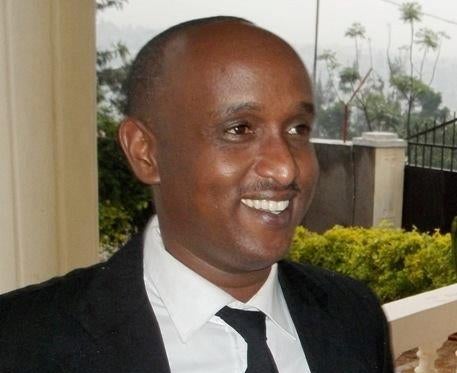
- Gustave Makonene, coordinator of Transparency International Rwanda's Advocacy and Legal Advice Center in Rubavu.© 2012 Private
Author(s):
Wenzel MichalskiPublished in:
Huffington PostThe details of Gustave Makonene's death are gruesome. His body was found outside the lakeside town of Rubavu, in northwestern Rwanda, on July 18, 2013. The police medical report indicated he was strangled. Local residents who saw his body gave Human Rights Watch more graphic detail. They believed his body may have been thrown from a car on a road above the lake and ended up twisted around a large tree, which had blocked its fall into the water. There was a rope around his neck. One of the first people to see Makonene's body told Human Rights Watch that passers-by were afraid of approaching. "People were shocked," he said. "We did not understand why this happened."
Gustave Makonene was the coordinator of Transparency International Rwanda's Advocacy and Legal Advice Center in Rubavu. Until his death, he didn't have a high public profile. He just got on with his work, receiving and investigating cases for the anti-corruption organization. Some of the recent cases he had handled reportedly involved allegations of corruption by members of the police.
His brutal, unexplained death briefly thrust Makonene into the spotlight. But within a short time, no one was talking about it anymore and it seemed the matter had been forgotten. When Human Rights Watch began its own investigation into the case and issued a news release, the reaction we encountered was, at best, passive concern. More often it was a disturbing silence and evasion.
The German government should be leading calls for justice for Makonene's murder. Not only is Germany an important donor and longstanding friend of Rwanda, but it is also the home of Transparency International's headquarters. The German Development Agency Gesellschaft für Internationale Zusammenarbeit (GIZ) supports Transparency International Rwanda, so the murder of one of its employees should be of direct concern.
One year on, there are still many unanswered questions about Makonene's death and the motive for his murder. To date, official investigations have not shed any light on the circumstances of his death. Soon after the murder, the police arrested four people, but they were released for lack of evidence. There have been no further arrests. In January 2014, Rwandan justice officials told Human Rights Watch that there had been no progress in their investigations but that the case was still open. Recently the ministry of justice told Human Rights Watch that investigations were ongoing and that there was additional information from the police, but did not provide further details. Barring a lucky break, these questions will continue to haunt Makonene's family and friends.
But there are other, equally troubling questions. Why have Rwanda's media and independent organizations been so quiet about this murder, and what does this silence mean for the few human rights and anti-corruption activists left in the country?
As a result of years of government intimidation and harassment, Rwanda's independent non-governmental organizations are extremely weak. The collective public silence around Makonene's murder reflects a broader fear of speaking out on politically sensitive cases. The Rwandan media, dominated by pro-government press and radio, are similarly reluctant to report on such cases. As a result, the murder of this anti-corruption activist slipped under the radar. Hardly anyone inside or outside Rwanda had even heard about it.
Contrast this with neighboring Burundi, for example, where five years after the murder of the anti-corruption activist Ernest Manirumva, nongovernmental organizations continue to organize public demonstrations every year on the anniversary of his death, hold news conferences and mobilize international support – despite repeated harassment and threats by state officials. Manirumva's friends and colleagues will not rest until justice is served. Their counterparts in Rwanda are nowhere to be seen.
When an anti-corruption campaigner is violently murdered in any country, alarm bells should ring. But human rights organizations and journalists in Rwanda have been so cowed over the years that none of them dare campaign publicly about human rights abuses anymore. Even fewer carry out in-depth work on corruption. The silence around Makonene's death speaks volumes.
Rwandan prosecuting authorities should re-focus their efforts on this case, not only to deliver justice to Makonene's family but to reassure Rwanda's remaining few activists.
At the international level too, there is a responsibility to ensure that this case is not forgotten. If local voices in Rwanda have been silenced, international voices must rise in their place. The safety of other activists in Rwanda depends on it.
The first anniversary of Makonene's death is an appropriate time for the German government to express that concern publicly and to ask Rwandan authorities to redouble their efforts to bring the killers to justice.
http://www.hrw.org/news/2014/07/20/quiet-murder-rwanda
__._,_.___
Posted by: Samuel Desire <sam4des@yahoo.com>
| Reply via web post | • | Reply to sender | • | Reply to group | • | Start a New Topic | • | Messages in this topic (1) |
----------------------------------------------------------
The Voice of the Poor, the Weak and Powerless.
-----------------------------------------------------------
Post message: AfricaRealities@yahoogroups.com
Subscribe: AfricaRealities-subscribe@yahoogroups.com
Unsubscribe: AfricaRealities-unsubscribe@yahoogroups.com
List owner: AfricaRealities-owner@yahoogroups.com
__________________________________________________________________
Please consider the environment before printing this email or any attachments.
---------------------------------------------------------------------------------------------------------------------
-http://www.africarealities.com/
-https://www.facebook.com/africarealities
The Voice of the Poor, the Weak and Powerless.
-----------------------------------------------------------
Post message: AfricaRealities@yahoogroups.com
Subscribe: AfricaRealities-subscribe@yahoogroups.com
Unsubscribe: AfricaRealities-unsubscribe@yahoogroups.com
List owner: AfricaRealities-owner@yahoogroups.com
__________________________________________________________________
Please consider the environment before printing this email or any attachments.
---------------------------------------------------------------------------------------------------------------------
-http://www.africarealities.com/
-https://www.facebook.com/africarealities

.


__,_._,___
Comments
Post a Comment